Thursday, December 30, 2010

2011-Rabbit Year


A pet rabbit is dressed as Santa Claus to celebrate Christmas and the Year of the Rabbit at a pet rabbit shop in Yokohama, south of Tokyo. The year 2011 is the Year of the Rabbit on the Chinese zodiac calendar.

‘Jellyfish Joyride’ a threat to the oceans


Early action could be crucial to addressing the problem of major increases in jellyfish numbers, which appears to be the result of human activities. New research led by CSIRO Climate Adaptation Flagship and University of Queensland scientist, Dr Anthony Richardson, presents convincing evidence that this 'jellyfish joyride' is associated with over-fishing and excess nutrients from fertilizers and sewage.

Dense jellyfish aggregations can be a natural feature of healthy ocean ecosystems, but a clear picture is now emerging of more severe and frequent jellyfish outbreaks worldwide,' Dr Richardson says.

The new research, by Dr Richardson and colleagues at the University of Miami, Swansea University and the University of the Western Cape, has been published in the international journal.

Fish normally keep jellyfish in check through competition and predation but overfishing can destroy that balance,' Dr Richardson says. Climate change may favor some jellyfish species by increasing the availability of flagellates in surface waters - a key jellyfish food source. Warmer oceans could also extend the distribution of many jellyfish species.

'Mounting evidence suggests that open-ocean ecosystems can flip from being dominated by fish, to being dominated by jellyfish,' Dr Richardson says.

Tuesday, December 28, 2010

Finest Chocolate from Cacao Tree


“The production of high quality chocolate, and the farmers who grow cacao tree, will benefit from the recent sequencing and assembly of the chocolate tree genome”, according to an international team led by Claire Lanaud of CIRAD, France, with Mark Guiltinan of Penn State, and including scientists from 18 other institutions.

The team sequenced the DNA of a variety of Theobroma cacao, considered to produce the world's finest chocolate. Many growers prefer to grow hybrid cacao trees that produce chocolate of lower quality but are more resistant to disease.

"Fine cocoa production is estimated to be less than 5 percent of the world cocoa production because of low productivity and disease susceptibility," said Guiltinan, professor of plant molecular biology.

The trees are also seen as an environmentally beneficial crop because they grow best under forest shade, allowing for land rehabilitation and enriched biodiversity.

The team's work identified a variety of gene families that may have future impact on improving cacao trees and fruit either by enhancing their attributes or providing protection from fungal diseases and insects that effect cacao trees.

Monday, December 27, 2010

Brain is not fully mature until 30s and 40s


Professor Sarah-Jayne Blakemore, a neuro scientist with the Institute of Cognitive Neuroscience at University College London, said until around a decade ago many scientists had "pretty much assumed that the human brain stopped developing in early childhood," but recent research has found that many regions of the brain continue to develop for a long time afterwords.

The prefrontal cortex is the region at the front of the brain just behind the forehead, and is an area of the brain that undergoes the longest period of development. It is an important area of the brain for high cognitive functions such as planning and decision-making, and it is also a key area for social behavior, social awareness, for empathy and understanding and interacting with other people, and various personality traits. Prof. Blakemore said the prefrontal cortex “is the part of the brain that makes us human,” since there is such a strong link between this area of the brain and a person’s personality.

Prof. Blakemore said brain scans show the prefrontal cortex continues to change shape as people reach their 30s and up to their late 40s. She said the region begins to change in early childhood and then is reorganized in late adolescence but continues to change after that.

The research could explain why adults sometimes act like teenagers, sulking or having tantrums if they do not get their own way, and why some people remain socially uncomfortable until they are well out of their teens.

Monday, December 20, 2010

Newly Discovered Species of 2010

Tree Frog

O'Shaughnessy's Dwarf Iguana

Glass frog

Lungless Salamander

Eyed gecko

Stick Insect

The slug sucking snake

Rain Frog

Monday, December 13, 2010

Black Smokers From Under the Sea


What is a black smoker?


You've probably seen or heard of natural hot springs on land, like Old Faithful at Yellowstone National Park. Similar phenomena occur under the oceans within mid-ocean ridge volcanoes and are called deep-sea hydrothermal (hot water) vents. They are known as black smokers.

These black smokers are chimney like structures made up of sulfur-bearing minerals or sulfides that come from beneath Earth's crust. They form when hot (roughly 350¡C); minerl-rich water flows out onto the ocean floor through the volcanic lava on a mid-ocean ridge volcano. Sulfide minerals grow or crystallize from the hot water directly onto the volcanic rocks at the place where the hot, mineral-rich water flows from the ground. This crystallization forms a hollow, chimney like sulfide structure through which the hot water continues to flow. As the hot, mineral-rich water rushes out of this chimney and mixes with the cold ocean bottom water, it precipitates a variety of minerals as tiny particles that make the vent water appear black in color. This is why these sulfide chimney structures are called black smokers.

Where is the black smoker?

Deep-sea hydrothermal vents occur along the mid-ocean ridges. Several different vents have been discovered since the first site was found in 1977 near the Galapagos Islands by earth scientists in the small research submersible ALVIN. One reason that relatively few sites have been observed is that scientists have explored only a small portion of the 50,000 kilometers of mid-ocean ridges. So it is likely that as scientists explore more of the mid-ocean ridges they will discover more deep-sea hydrothermal vent sites. In fact, scientists also have found that not every ridge has a deep-sea hydrothermal vent site. Scientists don't know exactly why some ridges have deep-sea hydrothermal vents and others don't. Two areas of active research are exploration of ocean basins and investigation of the processes that cause deep-sea hydrothermal vents. This expedition will make observations and collect samples that scientists will use to learn more about the processes at deep sea hydrothermal vent sites.

Why do we need to know about black smoker?


Large amounts of heat and chemical mass are transferred from deep within Earth to Earth's surface through deep-sea hydrothermal vents. The chemistry of ocean water is controlled in part by this process. Thus, understanding how deep-sea hydrothermal vents work is critical to understanding the dynamic nature of our planet.

Deep-sea hydrothermal vents support extraordinary ecosystems deep beneath the surface of the oceans. These ecosystems are the only communities on Earth whose immediate energy source is not sunlight. Life on Earth, and even possibly on other planets, may have formed in environments similar to these.

The life-forms that support the food chain at deep-sea hydrothermal vents also participate in the formation of the minerals that make up the sulfide chimney structures. Understanding this biochemical mineral formation process will help us to understand ore (minerals of economic interest) formation processes in general.

Monday, December 06, 2010

Coconut a fruit, nut or seed?


Botanically speaking, a coconut is a fibrous one-seeded drupe, also known as a dry drupe. However, when using loose definitions, the coconut can be all three: a fruit, a nut, and a seed.

Botanists love classification. However, classification of plants can be a complicated matter for the average person. Coconuts are classified as a fibrous one-seeded drupe. A drupe is a fruit with a hard stony covering enclosing the seed (like a peach or olive) and comes from the word drupa meaning overripe olive. A coconut, and all drupes, have three layers: the exocarp (outer layer), the mesocarp (fleshy middle layer), and the endocarp (hard, woody layer that surrounds the seed).

The coconut we buy in the store does not resemble the coconut you find growing on a coconut palm. An untouched coconut has three layers. The outermost layer, which is typically smooth with a greenish color, is called the exocarp. The next layer is the fibrous husk, or mesocarp, which ultimately surrounds the hard woody layer called the endocarp. The endocarp surrounds the seed. Generally speaking, when you buy a coconut at the supermarket the exocarp and the mesocarp are removed and what you see is the endocarp.

Some scientists like to refer to the coconut as a water dispersal fruit and seed. A seed is the reproductive unit of a flowering plant. From a reproductive point of view, a seed has the “baby” plant inside, with two basic parts: the embryo root (hypocotyl) and the embryo leaves (epicotyl). In the coconut’s case, if you look at one end of the coconut, you’ll see three pores (also called eyes). The coconut seed germinates and a shoot emerges from one of the pores. In addition to the “baby” plant in the seed, there is the food to kick off its life called the endosperm. The endosperm is what makes up most of the seed and, in the coconut’s case, is the yummy white stuff we eat.

The word coconut itself can also be confusing because the word “nut” is contained in the word. A nut can be defined as a one- seeded fruit. With that loose definition, a coconut can also be a nut. However, a coconut is not a true nut. A true nut, such as the acorn, are indehiscent or do not open at maturity to release its seeds. The seeds are released when the fruit wall decays or are digested by an animal.

Yet another interesting aspect of the coconut that has baffled scientists for over 200 years is where did it originate? Is it of Old World or New World origin? Scientists have used art, botany, entomology, etymology, folklore, fossils, genetics, and travel records to try to figure out where the coconut first appeared.

Odoardo Beccari, a renowned palm specialist from the early 20th century, suggests that the coconut is of Old World origin and more than likely came from the Indian Archipelago or Polynesia. To strengthen his argument, there are more varieties of coconut palms in the Eastern hemisphere than in the Americas.

However, some scientists (O.F. Cook , H.B. Guppy, K.F.P. von Martius,) argue that the coconut is of New World origins, having migrated westward across the Pacific.

Interesting Coconut Facts

* Every bit of the coconut is used. As a result, coconuts are called the “Tree of Life” and can produce drink, fiber, food, fuel, utensils, musical instruments, and much more.

* When intra-venous (IV) solution was in short supply, doctors during World War II and Vietnam used coconut water in substitution of IV solutions.

* Botanically, the coconut palm is not a tree since there is no bark, no branches, or secondary growth. A coconut palm is a woody perennial monocotyledon with the trunk being the stem.

* Possibly the oldest reference is from Cosmas, a 5th century AD Egyptian traveler. He wrote about the “Indian nut” or “nut of India” after visiting India and Ceylon, Some scholars believe Cosmas was describing a coconut.

* Soleyman, an Arab merchant, visited China in the 9th century and describes the use of coir fiber and toddy made from coconuts.

* In 16th century, Sir Francis Drake called coconut “nargils”, which was the common term used until the 1700’s when the word coconut was established.

* It takes 11 -12 months for the coconut to mature.

* At one time scientists identified over 60 species of Cocos palm. Today, the coconut is a monotypic with one species, nucifera. However, there are over 80 varieties of coconut palms, which are defined by characteristics such as dwarf and tall.

* Coconut growing regions are as far north as Hawaii and as far south as Madagascar.

Wednesday, December 01, 2010

Listen to Song of the Sun


To most of us, the sun seems to dangle in space silently without making so much as a peep. Nevertheless, "the sun is a very noisy place," said Scott McIntosh of the National Science Foundation -supported National Center for Atmospheric Research.

The sun sounds like a low hum punctuated by frequent rhythmic, bass-y thumps. Sun generate its sound composed of gases; the sun's core contains a giant nuclear fusion factory, where hydrogen is pressed into helium at temperatures of about 27,000,000° Fahrenheit (15,000,000° Celsius). The energy of this nuclear fusion factory generates convection that reaches all the way to the sun's surface.

The convection follows regions, or cells, and is driven by gas that roils and boils, similar to the boiling of water in a pot. The motion of the gas within the convection cells changes the light waves emitted by the surface of the sun.

Scientists measure the changing light waves using an instrument called a dopplergraph that is mounted on a spacecraft called the Solar and Heliospheric Observatory (SOHO). The measured light changes are translated into motion (sound) waves by computer models that capture the relationships between light waves and sound waves.

Because the resulting sound waves are at a frequency too low to be heard by humans, the signals are sped up to become audible. The result: an inferred composite of solar sound waves that includes "all kinds of frequencies," McIntosh said.

The sun's serenade can only be inferred because there is no air in the 93 million miles of space between the Earth and sun. And since sound cannot travel through a vacuum, the sun cannot be directly heard from Earth.

McIntosh compares the multi-frequency song of the sun to the ringing of cathedral bells that each hit different notes. Just as cathedral bells get louder and chime out certain pitches when certain bells are simultaneously rung, the sun belts out rhythmic bass thumps over its background hum when certain frequencies overlap with one another.

The relatively recent discovery and understanding of the sun's waves are enabling scientists to, for the first time, go under the surface and actually "see" inside the sun. With the help of the dopplergraph, which is used to track the time taken by certain waves to travel through the sun and back--similar to the way that seismographs are used to track waves of energy traveling below and along the Earth's surface (in order to help scientists detect earthquakes).

From the dopplergraph measurements, scientists can deduce the temperature, chemical composition and motions of gases from just below the sun's surface to close to its core. This technique is also being used to investigate the surfaces and interiors of other stars besides the sun.
Friday, November 26, 2010

Explorers Begin Voyage of Discovery

Scientists from the United States and Indonesia have begun a journey of discovery in a region of the deep ocean near Indonesia where almost no one has gone before, sharing what they learn as it happens with scientists, students and citizens around the globe.

The Indonesia-USA Deep-Sea Exploration of the Sangihe Talaud region, called INDEX 2010, is a three-year partnership between the U.S. National Oceanic and Atmospheric Administration (NOAA), the Indonesian Ministry of Marine Affairs and Fisheries, and the Indonesian Agency for the Assessment and Application of Technology to map the seafloor and study the rich marine biodiversity of an area of southeast Asia where the Indian and Pacific oceans meet.

The expedition advances the approach that President Obama called for in his June 2009 commitment at Cairo University to renew U.S. engagement with Muslim-majority countries.

The expedition includes two specially equipped exploration and research ships and two state-of-the-art exploration command centers ― one in Seattle and one in Jakarta ― where U.S. and Indonesian scientists will work side by side during ship operations and open their discoveries to students and the public through a dedicated website.

Data and images from the seafloor are being sent from the ships and from the U.S. ship’s remotely operated vehicle (ROV) in near real time via broadband satellite and high-speed Internet, allowing scientists and other participants ashore to engage in the expedition via telepresence, giving them an up-close view of the area being explored.

“We’re very happy that the government of Indonesia has welcomed us in a partnership of science and technology development,” Craig McLean, acting assistant administrator of NOAA’s Office of Oceanic and Atmospheric Research, told America.gov, “to bring our relatively newfound exploration capabilities in the United States to share with our Indonesian colleagues at a scientific level and at a level of public interest and education.”

“The area of the ocean that we’re going to look at has been of interest to ocean explorers for some time,” McLean said. “Biologically it’s recognized as a particularly diverse, if not potentially the most diverse, area of ocean in the world.”

“The tectonic phenomenon of Indonesia, such as underwater volcanoes, hydrothermal vents and other natural activities, contributes to greater deep-sea biodiversity,” Indonesian Minister of Marine Affairs and Fisheries Fadel Muhammad told America.gov July 14.

“This scientific knowledge provides extensive understanding of climate crisis and its related challenges,” he added. “As we still know very little about our ocean, it is important to continue scientific exploration in order to discover nature’s benefits for our communities.”

The information gathered and products developed, like digital maps and high-definition video, will help experts better understand, use and protect ocean resources. Coral ecosystems, sponges and other marine organisms offer promise for treating diseases. Some deep-sea ecosystems include organisms that can be used as food. And information from deep-sea exploration can add to knowledge about earthquakes and tsunamis.

Only about 5 percent of the world’s oceans has been explored.

EXPLORING THE UNKNOWN

For the expedition, each nation is contributing a ship with special capabilities. INDEX 2010 is the maiden voyage of NOAA ship Okeanos Explorer, the only U.S. government ship dedicated to ocean exploration. Okeanos is from the Greek word for ocean exploration, and the ship was named in a contest for schoolchildren.

Among the ship’s many systems is a hull-mounted multibeam sonar, which uses sound pulses to detect shapes on the seafloor and produce high-resolution maps of the seafloor as deep as 7,000 meters. It also has a two-piece ROV, attached to the ship by a tether, that is able to operate to depths of 4,000 meters. One vehicle is suspended above the other to light up and record the surroundings.

“We’re putting the ship in a position where it’s going out to largely unknown areas of the ocean ― areas where, if there were a map, there would be a big question mark,” scientist John McDonough, deputy director of the NOAA Office of Ocean Exploration and Research, told America.gov.

“The mapping system will allow us to bring back good maps of an area,” he added, “creating a foundation of information that others can use to make determinations about going back and doing follow-up work.”

The Okeanos Explorer will map the deep ocean floor and water column, collecting oceanographic data and obtaining high-definition video through the ROV’s cameras. The Indonesian ship Baruna Jaya IV will map the seafloor in different locations and collect biological and other samples from the sea.

THE JOURNEY BEGINS

The expedition’s work has already begun. Between June 24–July 14 for Okeanos Explorer and July 14–19 for Baruna Jaya IV, Okeanos conducted multibeam mapping and ROV operations and Baruna Jaya conducted mapping operations and more traditional sampling.

The final leg takes place July 21–August 7 for Okeanos and July 20–August 7 for Baruna Jaya IV.

McDonough said the Okeanos Explorer plans to return to Indonesia in the summer of 2011 for a second year of operations. He said the results of exploration and discussions with the project’s science team and partners will determine activities for the rest of the three-year project.

Sunday, November 21, 2010

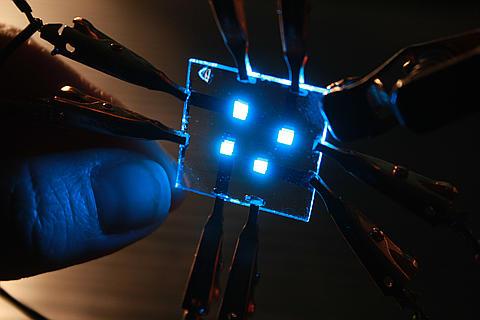
Organic Light Emitting Devices To The Masses


One of the most recent inventions in the field of light emitting devices may modify the way people light their homes and design clothes. The device represents a thin film of plastic able to carry out electricity and generate solar power.
Scientists working on the international project are looking ahead to bring the organic light emitting devices to the masses. Thus the success of this invention could significantly cut costs by billions of dollars each year.
Due to the reality that the organic light emitting devices are very thin and supple, electronic display screens could be with no trouble created on nearly every material, thus, for example, clothing could, for the first time in history, display specific electronic information.
There are various ways of using this OLED, like for example modify the color of clothes, beer would be clever to display various sports results. In addition the OLED is much more resourceful than the light bulb used today.
Currently these plans are used in mobile phones and MP3 players. However, such OLED is not quite reliable for large TV or computer screens.
In order to create the device more efficient so later to open it to mass market, the international consortium of researches, Modecom, headed by the University of Bath, United Kingdom, started a three-year project which will cost about $1,700,000.

Thursday, November 18, 2010

Robert that Discovers of its own

Scientists at Aberystwyth University and the University of Cambridge in the UK engaged to invent world's first robot that can carry out its own experiments, produce hypotheses as well as make scientific discoveries. Researchers dubbed their latest invention Adam.

Working on its own, the robot-scientist already managed to find new functions for several genes of Saccharomyces cerevisiae, also known as brewer's yeast. The lead-researcher of the project is Ross King, a computational biologist at Aberystwyth. He says that up till now Adam made modest findings, but all the discoveries were real. Their latest invention consists of a room equipped with different laboratory instruments. It includes 4 personal computers that work as one brain. In addition, Adam has robot arms, a number of cameras, liquid handlers, incubators and more.

The robot was also supported with a database that enclosed information on the yeast genes, enzymes and metabolism, as well as a delivery of hundreds of metabolites. In case the strain was spotted to grow not very well, Adam registered new information about the function of the deleted gene.

It is worth mentioning that Adam is able to perform over 1,000 related experiments daily. So far, the robot came up with and tested 20 hypotheses about the coding of genes for 13 enzymes, from which 12 were confirmed by researchers, who carried out their own experiments.

According to Will Bridewell, an artificial intelligence researcher at Stanford University in Palo Alto, California, this discovery is yet another step on the way of latest technological inventions.

Tuesday, November 09, 2010

Hazardous waste are harmful to human health and for the environment


Many things that are thrown out in the rubbish – like some household batteries, car oil, or old paint – can contain harmful chemicals that damage the environment. Find out how to dispose safely of domestic hazardous waste.

Waste is hazardous when it has properties that might make it harmful to human health or the environment. The term 'hazardous' does not always mean that such waste is immediately harmful, though some can be.

Domestic wastes that may be hazardous include:

* asbestos
* pesticides
* fluorescent tubes
* oils
* some paints
* some household and car batteries
* discarded electrical equipment like TVs and computer monitors, fridges and freezers
* discarded energy saving light bulbs (also known as CFLs)

Hazardous waste – including electrical items like TVs, computers and fridges – should not be put into the mixed municipal waste collection. Most of it can be taken to your local waste and recycling centre (sometimes referred to as the 'tip' or the 'dump'), which is run by your local council.

In some cases, your local council may be able to collect the waste from you. There may be a charge for this. They will also be able to advise you on where to take all types of hazardous waste in your area.

Batteries

From February 2010, all shops that sell large amounts of household batteries must provide a collection bin for used batteries. You may also be able to put old batteries in your regular household recycling bins - check to see if your local council accepts them. You can also take batteries to a waste and recycling centre.

Car batteries should also be taken to a waste and recycling centre. Some shops that sell car batteries also accept old batteries for recycling. Check when you buy a new car battery to see if the shop will recycle your old battery for you.

Energy saving lightbulbs (CFLs) can be hazardous if not disposed of properly, as they contain mercury. 'Energy saving light bulbs' explains how to recycle them safely.

If medicines are flushed down the toilet, traces of them can end up in water courses, like rivers or the sea.

You can take any unwanted medicines to your local pharmacy, who will dispose of them safely.

You could also ask your GP about disposing of medicines that are still in-date and useable. Some GP practices are registered to donate unwanted medicines to charities, for use in developing countries.
Asbestos

Asbestos can become dangerous if it's broken. You should contact your local council for special advice on how to deal with asbestos. More information on dealing with asbestos can be found in the 'Asbestos removal' article in the Home and Community section.

Monday, November 01, 2010

Reduce plastic waste


Reducing the amount of plastic and other packaging you buy helps reduce the amount of energy and water used in manufacturing and recycling. This also helps reduce the amount of waste that ends up in landfill.

You might already be recycling hard plastics in your recycling bin. In some areas, plastic bags can be recycled at supermarkets. Most other types of soft plastics are not recycled and end up in landfill.

For most situations, the best solution to reducing plastics and packaging is to choose re-usable options as much as possible.
Refuse and reduce

An easy way to reduce plastic waste is to reduce the need for plastic shopping bags. You can:

* Remember to take your own bags with you when you shop. You can use re-usable bags, boxes, a backpack or your own shopping trolley.
* If you need bags for a specific purpose, ask your local shop if they have bags made from recycled plastic.
* Encourage and remind friends and family to use re-usable bags.
* Take note of where you are using bags and think about whether you can reduce them.
* Save on plastic wraps, freezer bags and other soft plastics by using re-usable containers as much as possible. Think about covering food in a bowl with a lid or plate instead of plastic wrap.

Re-use and recycle

Many of the plastics we use can be re-used for other purposes, and eventually recycled:

* Washed takeaway containers make good stackable containers for frozen food and can be used again and again.
* Use bread bags, cereal bags and any other plastic packaging to wrap wet and smelly rubbish like meat bones or dirty nappies. You could also use these as bin liners.
* Most supermarkets accept plastic bags for recycling.
* If you have left-over plastic bags, see if other people need them. Charities and community groups often need bags for markets and sales.

Wednesday, October 27, 2010

Green Environment : Steps to Increase The Efficiency of Your Heating and Cooling System At Home


Heat & Cool Efficiently

As much as half of the energy used in your home goes to heating and cooling. So making smart decisions about your home's heating, ventilating, and air conditioning (HVAC) system can have a big effect on your utility bills — and your comfort. Take these steps to increase the efficiency of your heating and cooling system. For more information, see our Guide to Energy Efficient Heating & Cooling PDF (708KB).

Change your air filter regularly

Check your filter every month, especially during heavy use months (winter and summer). If the filter looks dirty after a month, change it. At a minimum, change the filter every 3 months. A dirty filter will slow down air flow and make the system work harder to keep you warm or cool — wasting energy. A clean filter will also prevent dust and dirt from building up in the system — leading to expensive maintenance and/or early system failure.

Tune up your HVAC equipment yearly

Just as a tune-up for your car can improve your gas mileage, a yearly tune-up of your heating and cooling system can improve efficiency and comfort. Learn more:

* Maintain your Equipment: A Checklist
* Finding the right contractor: 10 tips

Install a programmable thermostat

A programmable thermostat is ideal for people who are away from home during set periods of time throughout the week. Through proper use of pre-programmed settings, a programmable thermostat can save you about $180 every year in energy costs.
Seal your heating and cooling ducts

Ducts that move air to-and-from a forced air furnace, central air conditioner, or heat pump are often big energy wasters. Sealing and insulating ducts can improve the efficiency of your heating and cooling system by as much as 20 percent — and sometimes much more.

Focus first on sealing ducts that run through the attic, crawlspace, unheated basement, or garage. Use duct sealant (mastic) or metal-backed (foil) tape to seal the seams and connections of ducts. After sealing the ducts in those spaces, wrap them in insulation to keep them from getting hot in the summer or cold in the winter. Next, look to seal any other ducts that you can access in the heated or cooled part of the house. See our See our Duct Sealing brochure PDF (1.13MB) for more information. for more information.

Consider installing ENERGY STAR qualified heating and cooling equipment

If your HVAC equipment is more than 10 years old or not keeping your house comfortable, have it evaluated by a professional HVAC contractor. If it is not performing efficiently or needs upgrading, consider replacing it with a unit that has earned the ENERGY STAR. Depending on where you live, replacing your old heating and cooling equipment with ENERGY STAR qualified equipment can cut your annual energy bill by nearly $200. But before you invest in a new HVAC system, make sure that you have addressed the big air leaks in your house and the duct system. Sometimes, these are the real sources of problems rather than your HVAC equipment.

Ask about Proper Installation of your new equipment

Replacing your old heating and cooling equipment with new, energy-efficient models is a great start. But to make sure that you get the best performance, the new equipment must be properly installed. In fact, improper installation can reduce system efficiency by up to 30 percent — costing you more on your utility bills and possibly shortening the equipment's life.

Sunday, October 24, 2010

Department of Energy Announces Winners of Federal Energy and Water Management Awards

The U.S. Department of Energy today announced that more than 30 individuals, teams, and organizations across the federal government were selected to receive Federal Energy and Water Management Awards for outstanding and innovative efforts to implement sustainable strategies that improve energy, water, and vehicle fleet efficiency. These awards demonstrate the commitment by federal agencies to invest in efficiency measures that save money for taxpayers, reduce carbon pollution, and create a stronger economy for the American people. The 31 initiatives receiving awards today saved taxpayers almost $42 million in energy and water costs in fiscal year 2009 and kept the equivalent of about 190,000 metric tons of carbon dioxide from being released into the atmosphere. These efforts are also helping to move cutting-edge clean energy technologies into the marketplace, create new American jobs, and strengthen our national security.

"As the single largest consumer of energy in the country, the federal government has a responsibility and an opportunity to lead by example in implementing clean energy projects that save taxpayers money, create new jobs, and reduce carbon pollution," said Secretary of Energy Steven Chu. "Today's award winners show what is possible when it comes to implementing energy efficiency and renewable energy projects in the federal government and beyond."

The 2010 Federal Energy and Water Management Awards winners were selected from nominations submitted by 17 federal agencies. Included among the award winners are employees from the U.S. Air Force, Army, Marine Corps, and Navy; the Departments of Defense, Energy, Homeland Security, Interior, Transportation, and Veterans Affairs; the Environmental Protection Agency; General Services Administration; and National Aeronautics and Space Administration.

Last year, President Obama signed Executive Order 13514 on Leadership in Environmental, Energy, and Economic Performance, which called on the federal government to dramatically reduce its greenhouse gas emissions and implement aggressive energy and water efficiency programs. As part of their commitment to meet the president's goals to "green the government," agencies are undertaking projects to increase their use of renewable energy, make their buildings and vehicles more efficient, and limit their use of fossil fuels.

The federal government has already achieved substantive results towards cleaner energy and improved energy efficiency. Data for fiscal year 2009 shows that the federal government has decreased energy consumption per square foot of building space by approximately 13.1% compared with fiscal year 2003, surpassing the goal of 12% for the year. The federal government also reported purchasing or producing 2,331 Gigawatt-hours of electricity from renewable sources, equivalent to 4.2% of their electricity use, surpassing the goal of 3% for fiscal year 2009.

The combined accomplishments of this year's winners include:

* Saving 38 billion Btu through the installation of renewable energy systems, including solar thermal and photovoltaic systems, wind turbines, and methane gas generated by landfills.
* Implementing facility-wide comprehensive changes to operations and maintenance practices, saving 1.7 trillion Btu by upgrading heating, ventilation, and air conditioning equipment, and by installing high efficiency lighting and energy management control systems.
* Installing significant water efficiency improvements, saving 3.2 billion gallons of water through high efficiency plumbing fixtures, upgrades to irrigation systems, use of native landscaping, discovery and repair of major leaks, and reuse of reclaimed and recovered ground water.
* Building Leadership in Energy and Environmental Design (LEED) facilities with state-of-the-art technologies and environmentally friendly workspaces.
* Implementing energy savings performance contracts, in which a federal agency partners with an energy service company, who designs and constructs a project, arranges the necessary financing, and guarantees that the improvements will generate energy cost savings sufficient to pay for the project over the term of the contract.
* Implementing utility energy services contracts, where a utility arranges financing to cover the capital costs of the project, which are repaid over the contract term from cost savings generated by the energy efficiency measures.

This awards program is one of several held each year in October in conjunction with Energy Awareness Month to highlight the critical importance of energy efficiency and renewable resources and federal efforts to lead by example in energy management. To see the complete list of this year's winners visit the 2010 Federal Energy and Water Management Award Winners Web page.

Wednesday, October 20, 2010

Few Trees and Insects Are Made for Each Other


Coevolution--mutual adaptation of two or more species to one another--shapes much of the natural world and produces some of the most remarkable biological phenomena, from the exceptional speed of cheetahs and gazelles, to the virulence of the HIV and swine flu viruses.

The interaction between plants and insects is another prime example. These range from pollination relationships where both species benefit to insect outbreaks that kill entire forests. Plants and insects are also amazingly diverse, with more than 300,000 described species of insects and at least 200,000 species of flowering plants. Many scientists, starting with Charles Darwin, have suggested that coevolution might be responsible for the enormous diversity of these two groups of organisms. However, why mutual adaptation would lead to species diversity is not clear. New research is shedding light on this century-old question.

"The most repulsive tree"

Joshua trees are probably some of the strangest plants in the world. Relatives of agaves, they look like an aloe on steroids, with short, spiny leaves, and long spindly branches that form twisted candelabra.

Their bizarre appearance inspires the imagination of anyone who sees them. Early American explorer John C. Fremont described them as, "The most repulsive tree in the Vegetable Kingdom." Mormon settlers saw in their silhouette the figure of the prophet Joshua. More recent visitors to Joshua Tree National Park have called Joshua trees, "The Dr. Seuss Tree."

"The most remarkable fertilization system"

The strangest thing about Joshua trees may be the way that they are pollinated. These desert plants produce no nectar. So, in order to reproduce, the Joshua tree relies on small, inconspicuous grey moths. The moths have tentacle-like appendages that grow out of their jaws, which they use to collect pollen from Joshua tree flowers. The moths then crawl from flower to flower, deliberately spreading pollen onto the female part of each flower.

Why would a simple moth go to so much trouble to help a tree? The answer is that the moth needs the Joshua tree for her own reproduction. Before she pollinates each flower, the moth lays her eggs on the immature seeds of the Joshua tree, cutting into the flower with a thin, blade-like organ called an ovipositor. Her eggs will eventually hatch into caterpillars that will eat some of the seeds before crawling to the ground to form a cocoon. So, for her babies to eat, the moth needs to ensure that there will be Joshua tree seeds, and for there to be seeds, the moth must pollinate the flower.

Needless to say, the relationship between the Joshua tree and its pollinators is fascinating. In fact, Charles Darwin considered it "the most remarkable fertilization system ever described."

Seven years in the desert

In 2003, much of what we thought we knew about Joshua trees and their pollination changed. That year, biologist Olle Pellmyr of the University of Idaho discovered that Joshua trees were actually pollinated by two similar-looking-but-genetically-distinct species of moth.

Olle, his graduate students and I have spent the last seven springs living in the Mojave Desert seeking to understand how this difference affects the relationship between the Joshua tree and its pollinators. The results show that coevolution between plants and insects may indeed be the reason both groups are so startlingly diverse.

One of the first discoveries that we made was that the two moth species occur in different parts of the desert. The slightly larger of the two species exists in California and central Nevada. The second, smaller species is distributed throughout southern Nevada and Arizona.

Second, it seems that the trees pollinated by each moth species are not exactly the same. When we looked at the flowers of different trees, we found the covering that protects the immature seeds was much thicker on plants that were pollinated by the larger moth.

Finally, we noticed that the ovipositors--the organ that they use to lay their eggs on the seeds--of the two moth species matched the thickness of the wall surrounding the seeds. Each moth has an ovipositor that is just the right length to reach the seeds of the flower it pollinates, almost as if the moth and the tree were made for each other.

This view of life

The implications of these findings were tantalizing. First, the match between the Joshua tree flowers and the moths' ovipositors suggested that coevolution might have molded the relationship between the plant and the pollinator. Second, because the plants are completely dependent on the moths for reproduction, the differences in the flowers might have caused Joshua trees to split into two different species.

This might provide an explanation for how interactions between species have generated the diversity of plants and insects. I am working to further test that hypothesis by measuring natural selection acting on the moths and the trees.

Though the two moth species occur mostly in different parts of the desert, they live side-by-side in a small stretch of desert in Nevada. At that site, both moths visit trees with both flower types, but when moths lay eggs on a tree that is normally pollinated by the other species, the moths produce fewer caterpillars. That is, moths that lay eggs on the 'wrong' tree have lower fitness.

I'm currently conducting experiments that will address why this happens, and whether the trees also pay a cost when pollinated by the wrong species of moth.

The most exciting part of this research is the prospect that a single natural process--natural selection--has produced both the spectacular diversity of plants and insects and the remarkable fit between insects and the flowers they pollinate.

Monday, October 18, 2010

Toxic Grass Puts Animals to Sleep

Legend has it that five railroad surveyors killed by Indians in 1854 in New Mexico lost their lives because they unwittingly allowed their horses to graze on "sleepy grass" the night before. The next morning, under attack, the surveyors jumped on their horses to escape--but the animals were frozen in place. Without the means for a quick getaway, the workers were doomed.

Whether true or apocryphal--the story is unverified--it could have happened, considering the toxic effects of sleepy grass, also known as robust needle grass, which commonly grows in many western states and causes animals that eat it to turn into living statues--or, if they consume too much of it, even die.

"Native Americans are said to have fed a single seed to colicky babies to quiet them, and they--and ranchers--have fed small amounts to cattle to make them more sedate and easily managed when moving them from summer to winter ranges in the mountains," said Stan Faeth, professor of biology and head of the biology department at the University of North Carolina, Greensboro.

Moreover, in a book called "Horse Tradin," by Ben K. Green, the author recounts "how he bought a horse from the Mescalero Apaches in the 1920s which seemed tame and broken, but later found it was unbroken and wild--but had been fed a small amount of sleepy grass," Faeth added.

Sleepy grass has this effect because, like all plant species, it harbors microbial "partners," that is, microbes such as bacteria or fungi that "infect" the plant and live within plant tissues. The microbes can dramatically change plant growth and performance, frequently to the plant's benefit. Also, like plant and animal species, microbes also can hybridize and create new genetic species and variants.

Fungal endophytes, which are found in many types of grasses, make alkaloids which fight against drought and insects. But, as is the case with sleepy grass, these alkaloids also can be poisonous to animals--including humans.

"If ingested, infected sleepy grass--but only from a few selected populations--has the same effects on humans as in livestock," Faeth said. "One main alkaloid is lysergic acid amide--very closely related to LSD, but apparently without the hallucinogenic effects."

Faeth and his colleagues, who include Nadja Cech, associate professor in the university's department of chemistry and biochemistry, are trying to better understand the workings of fungal endophytes. Because their research could have broad implications for the multi-billion dollar livestock industry, as well as for the restoration of native grasslands and the management of forage grasses, the National Science Foundation (NSF) is funding the program as part of the American Recovery and Reinvestment Act of 2009.

In replenishing native grasses, for example, it would help to know whether seeds were infected before planting them. The knowledge also could help the turf grass industry in the planning and maintenance of recreation areas.

"You can plant grass with high endophytes in places where nothing is grazing--golf courses, for example," Faeth said. "The grass uses less water and resists insects. It's good for golf courses, but you don't want to plant it in pastures where it will make livestock sick."

Faeth's team has been conducting field experiments in Arizona on two native grasses--"sleepy grass," and Arizona fescue. The endophytes within Arizona fescue also make alkaloids but they are harmless to livestock.

The research team has created "common garden experiments" to understand how the endophytes work within the plant, and whether changing certain conditions can increase the grass's ability to survive and compete better in harsh environmental conditions.

"We take plants with different strains of endophytes and grow them," he said. "Then we alter the factors that can change the endophyte effect on the host--such as water, nutrients and competition. The alkaloid production stays the same. We are looking at the plant's response in terms of growth and reproduction--how does the plant respond to these variants? We want to better understand how [endophytes] work."

Endophytes sometimes are not beneficial to the plants, depending on the strain. "We are studying this, as well," Faeth said. Although generally thought to be positive to plants, "most of our research is showing you can get highly variable effects," he said. Also, one section of land can have mixed strains containing areas with toxic-producing endophytes--or not. There's no way to tell without testing--although livestock, once sickened, will not eat there again.

Faeth and his colleagues also have been collecting native grasses in very remote mountainous areas of New Mexico--Lincoln National Forest, near Cloudcroft, for example--as well as insects from the plants. They want to test the effects of endophytes and their alkaloids on herbivores. "Just like livestock, endophytes may protect grasses from insect consumers," he said.

The researchers gather the bugs using a machine, called a Burkhard Vortis Insect Sampling device, that suctions them out of the plant. "It makes a lot of noise--it runs on a gas leaf blower engine--and looks like some type of weapon," Faeth said.

These field trips may seem relatively benign, but sometimes, the unexpected happens. "On more than one occasion, we've had the local ranchers approach us, gun-in-hand, wondering 'what the hell are you doing out here?'" he said.

Another time, a rancher and his wife--who happily gave permission for the researchers to work on his land--often enjoyed chatting with the three young undergraduate and graduate students Faeth brought along--all of them women, and all raised in the city.

Monday, October 11, 2010

Bone-crushing Experiments possibly will Yield Better Protective Gear

No sample is safe in Nikhil Gupta's Composite Materials and Mechanics Lab at the Polytechnic Institute of New York University.

Whether it's a small nugget of rabbit bone or a piece of industrial protective foam, all are bound for a custom-built compression machine designed to study how materials split and shatter.

Gupta, a materials scientist and mechanical engineer, and his team capture each compression with a high-speed camera that records over 10,000 frames per second to study every crack and splinter. The results are critical--they may ultimately help physicians better diagnose and treat injuries and aid engineers as they improve protection for military and civilian armor, including helmets.

Along with collaborator Paulo Coelho, a New York University College of Dentistry materials scientist (and a dentist who specializes in surgical research well beyond the jaw bones), Gupta has pioneered research that reveals surprising insights about the effect of compression on bones, and about the limitations of the foams used to protect bones in helmets and armor.

Gupta and Coelho found that bone injuries differ dramatically depending on the speed at which the bone is compressed. At high compression rates--like a shock wave from a bomb blast or a hard hit in a football scrimmage--bones show widespread micro-cracks so small they can only be detected by a scanning electron microscope.

When bones are compressed slowly, as when jogging or falling, fewer cracks occur, but they tend to be larger and easily spotted. The experiments were conducted on rabbit femur bones, though the scientists believe similar findings would apply to a range of human bones.

"We were surprised to find that not only did the nature of the bone fractures change depending on the speed of compression, but that bones crack in different directions based on speed," Coelho said. Learning that bones need to be reinforced from multiple angles to prevent injury brought Gupta back to the initial impetus for his research--improving the foams used in protective military gear.

Two years ago, Gupta attended a conference at which veterans from Iraq and Afghanistan were discussing injuries related to Improvised Explosive Devices (IEDs). At that time, more than one-third of all war casualties were due to IEDs, which cause a unique type of brain injury that is difficult to diagnose. Those "closed" brain injuries result not from a direct impact or penetration of the skull, but from the force of the compression. Similar damage may be happening to other organs and bones, as well.

Damage from blast injuries is often not visible with today's diagnostic equipment, and soldiers may be pronounced healthy enough to return to the field. In many cases, the extent of the injury only becomes evident over time.

"I was already studying foams and body armor and developing new protective materials, but my approach changed when I learned about the nature and prevalence of IED injuries," Gupta said. "I realized it was critical to understand how the bones themselves behaved in these circumstances in order to devise the next-generation of protection."

Gupta set out in search of a collaborator who could bring essential medical expertise to the investigations. When colleagues introduced him to Coelho, the connection was immediate. "I had discussed the project with several physicians, but we spoke completely different languages," Gupta said. "But because Coelho's previous research has focused on bone surgery and we have a common background in materials science, we were able to start working very quickly."

In addition to researching bone injuries, Coelho and Gupta also exposed protective foams to their compression machine, called a "Kolsky Bar" system. They found that much like bone, foam materials behave differently as the rate of compression changes. Foams that seem soft when slowly compressed can become much stiffer under higher compression speeds. The team plans to investigate whether this change can actually increase, instead of reduce, the risk of injuries.

The next step for these two scientists is to combine the findings of the foam and bone studies by testing human bones and soft tissues with new formulations of protective foam. The ultimate goal is to enable manufacturers to create customized foams tailored to specific activities or environments. The implications are wide-reaching and may help designers create safer military armor, sports equipment and even automobiles and boats.

Since Gupta and Coelho showed widespread microscopic damage occurs in bones subjected to high compression rates, their findings also point to the need for improvements in medical diagnostic equipment that can one day detect injuries on a scale much smaller than current CT scanners.

According to Coelho, "now that we've seen how much bone damage happens at the extreme microscopic level, it's an opportunity to develop more sensitive devices that can diagnose such injuries and allow physicians to better treat that damage quickly."

Thursday, October 07, 2010

Good Bacteria can solve world's most complex problems

Good Bacteria Eat Bad Greenhouse Gas

A small rectangular window on the front of the fermenter shows bubbling liquid inside. If it is clear, then that means it is only solution. If it is foggy, then bacteria have been added. Today, the liquid looks milky grey. It fizzes and froths as the correct amounts of air and methane are added, growing and feeding the bacteria inside.

This solution is more than just bacterial soup; it could hold the answers to some of the world's most complex problems, including how to mitigate global warming and how to clean up toxic waste in the environment.

At first, that doesn't seem possible. How could a simple, one-celled organism do something that advanced technology struggles to do?

Amy Rosenzweig, a professor of biochemistry, molecular biology, cell biology and chemistry at Northwestern University, explains that this type of bacteria uses copper from the environment to metabolize methane, turning it into methanol for food.

Not only does this mean the bacteria leech heavy metals from the soil, but they also consume a potent greenhouse gas--solving two environmental issues in one molecular gulp.

"The process is very basic science," said Rosenzweig, whose work is funded by a National Science Foundation (NSF) grant from the American Reinvestment and Recovery Act (ARRA) (MCB-0842366). "But it has potential for a lot of real-life applications."

Some people suggest venting methane emissions through filters of these bacteria to scrub the methane out of the atmosphere. Others suggest feeding leftover methane from natural gas reserves to the bacteria so they can convert the gas into methanol--instead of exercising the typical solution of burning it. Then, the methanol could be stored and later used for fuel. The bacteria could also be used to dispose of copper and other heavy metals where levels are unnaturally high, preventing illness in humans.

But, before these real-world applications are explored, it's important to understand the physiological processes of how the bacterial cells work.

"There are always problems with stability," explained Rama Balasubramanian, a postdoctoral fellow in Rosenzweig's lab. "Any biological molecule is going to die over time. If we understand how it works, then we can design something more stable that will last for years."

For Rosenzweig's group, this involves better understanding how these bacteria are able to acquire copper from environmental mineral resources. Previous work suggests that the bacteria secrete a molecule called methanobactin, which binds tightly to copper ions to deliver them back to the cell.

"Something outside the cell would have to recognize the molecule, grab it, and push it back inside," she said. "We're trying to discover what cellular machinery makes this happen."

The process is explored by closely watching the bacteria in action. Members of Rosenzweig's lab spend their days growing bacteria in a 15-liter fermenter that's calibrated with an optimal flow of air and methane. The bacteria are starved of copper to force them to secrete methanobactin into the extracellular solution.

The researchers place the medium into a centrifuge and spin it at 7,000 times the force of gravity until the cells fall to the bottom, allowing methanobactin in the solution to be isolated. After a couple of purification steps, the molecule is ready to be studied.

"We don't know if all methane-consuming bacteria make methanobactins and secrete them to get copper," Rosenzweig said. "And if they do, is the process different in different species? You could imagine that every type of bacteria might make something slightly different to help them compete for copper."

The particular strain of bacteria that Rosenzweig studies was originally isolated in the hot baths in Bath, England, so the bacteria prefer high temperatures. But she emphasizes that methane-metabolizing bacteria, known as methanotrophs, are found everywhere.

Although Rosenzweig's grant covers three more years of research, Balasubramanian feels optimistic that a breakthrough will happen sooner.

"If our experiments continue to run correctly, then we may be just a year or two away from understanding how this molecule works," he said. "It will take much longer for the applications, but knowing how the molecule enters the cell is step number one."